




Description
-
-
-
-
-
-
-
-
-
-
-
-
-
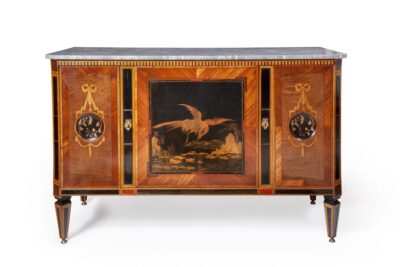
This Dutch Louis Seize commode with Japanese lacquer panels is not just a piece of furniture but a testament of beauty that continues to evolve across centuries.
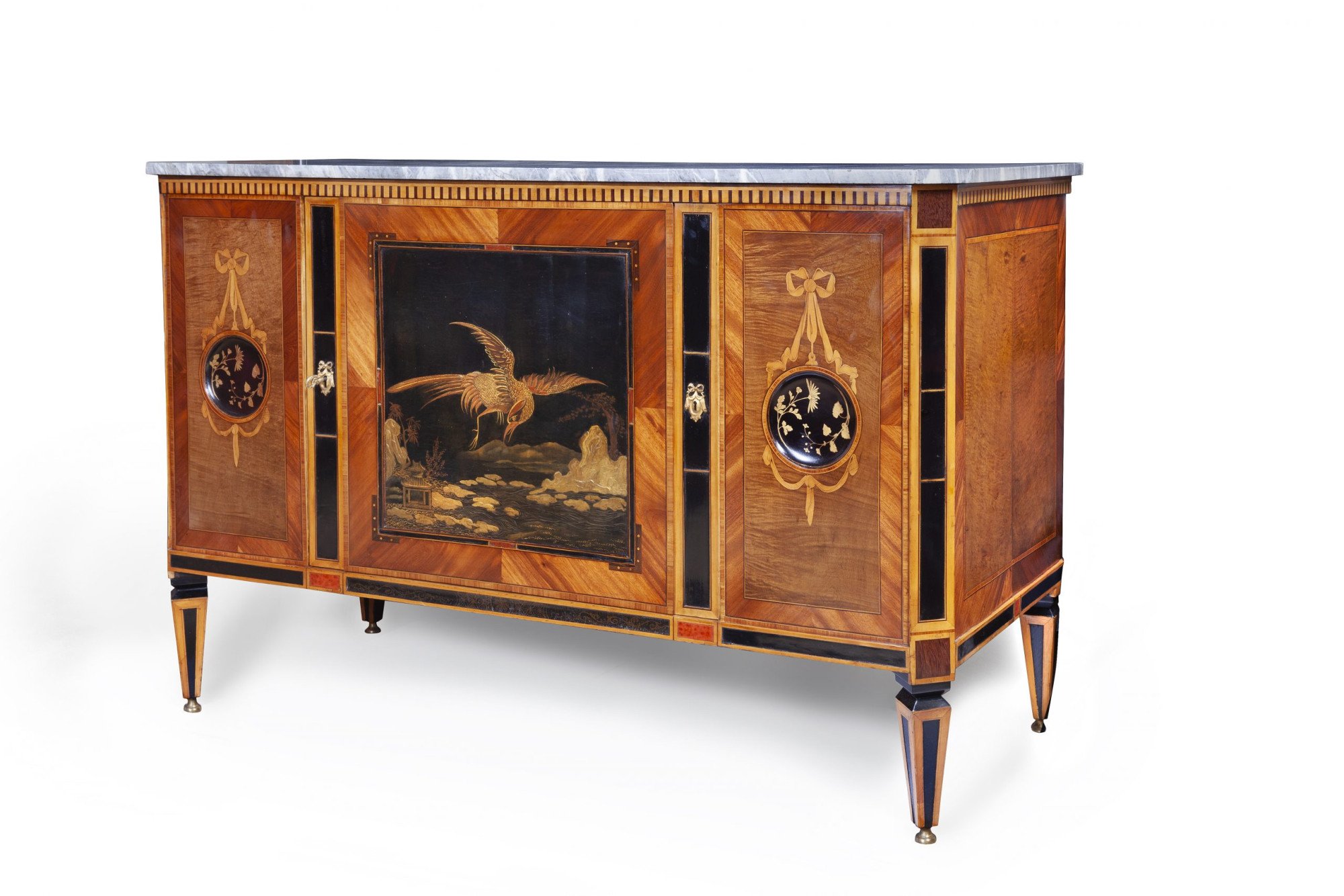
Created around 1780, this Louis Seize commode is a refined example of late 18th-century craftsmanship, embodying both the elegance of European neoclassicism and the allure of exotic influences. It reflects the restrained symmetry and balanced proportions characteristic, while simultaneously revealing a fascination with faraway cultures through its incorporation of Japanese lacquer panels.
At the heart of the commode lies a striking central panel depicting a phoenix in flight, soaring gracefully above an oriental landscape complete with a pagoda. This vivid scene, rendered in Japanese lacquer, immediately draws the eye. The phoenix, a timeless mythological symbol, speaks of rebirth, resilience, and transformation—its cyclical journey from ashes to renewal echoing themes that transcend cultures and eras.
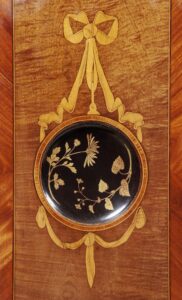
Flanking this central image are two smaller round lacquer panels adorned with delicate floral and foliage motifs, each framed with elegant bows crafted in maple wood. These details enhance the rhythmic harmony of the design while reinforcing the interplay between European structure and Asian decorative art.
-
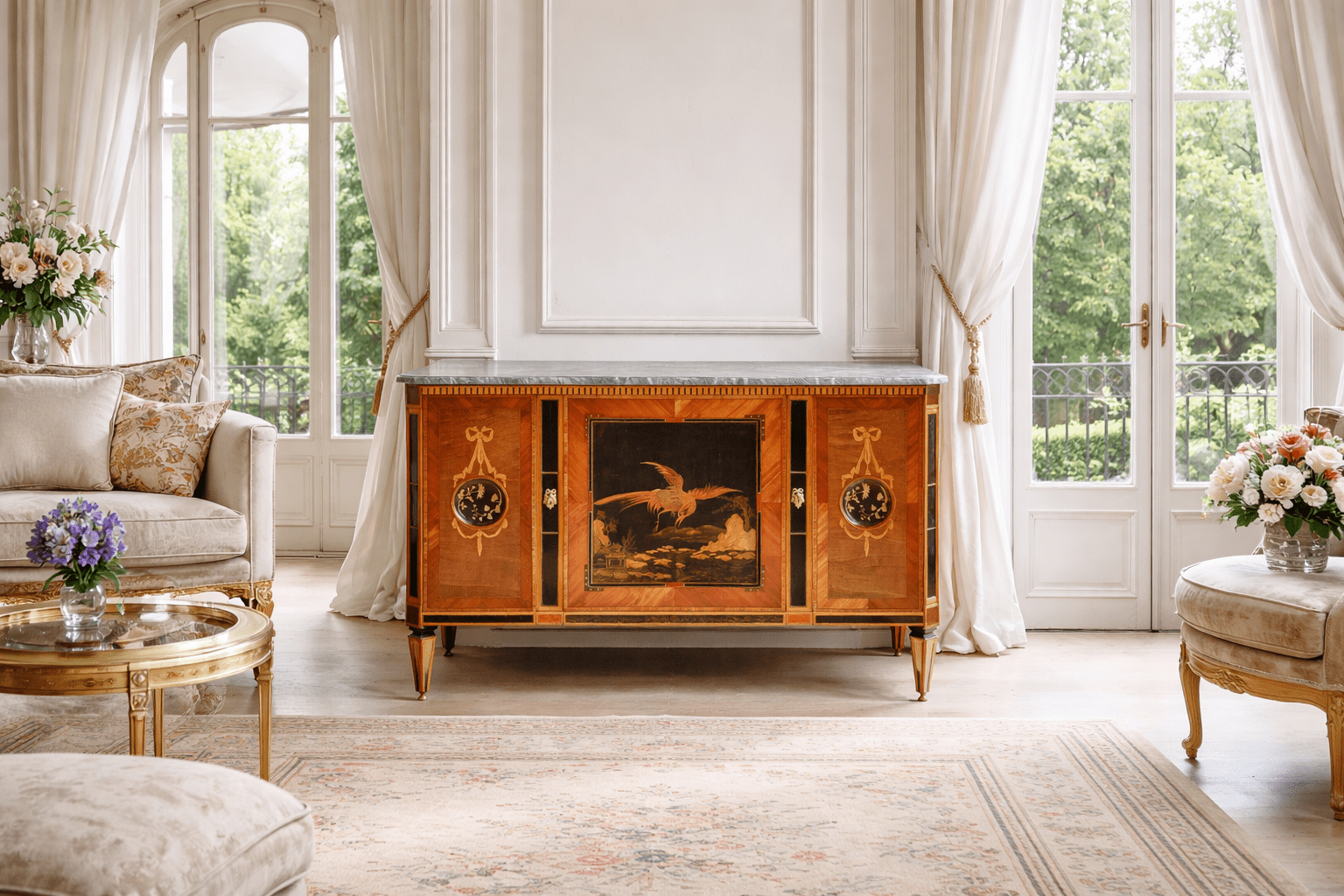
What makes this commode particularly compelling is its ability to bridge time. While firmly rooted in the 18th century, it resonates effortlessly within contemporary interiors with its clean lines and balanced composition and its historical richness introducing character and narrative into any space. It is precisely in this dialogue between past and present that the piece finds its enduring appeal
Having elder beauty take its place, enchanting modern spaces
-
-
-
-
-
-
-
-
-
-
-
Reviews
There are no reviews yet.